THE WORSHIP SPACE
Planning a temple backdrop for your deity
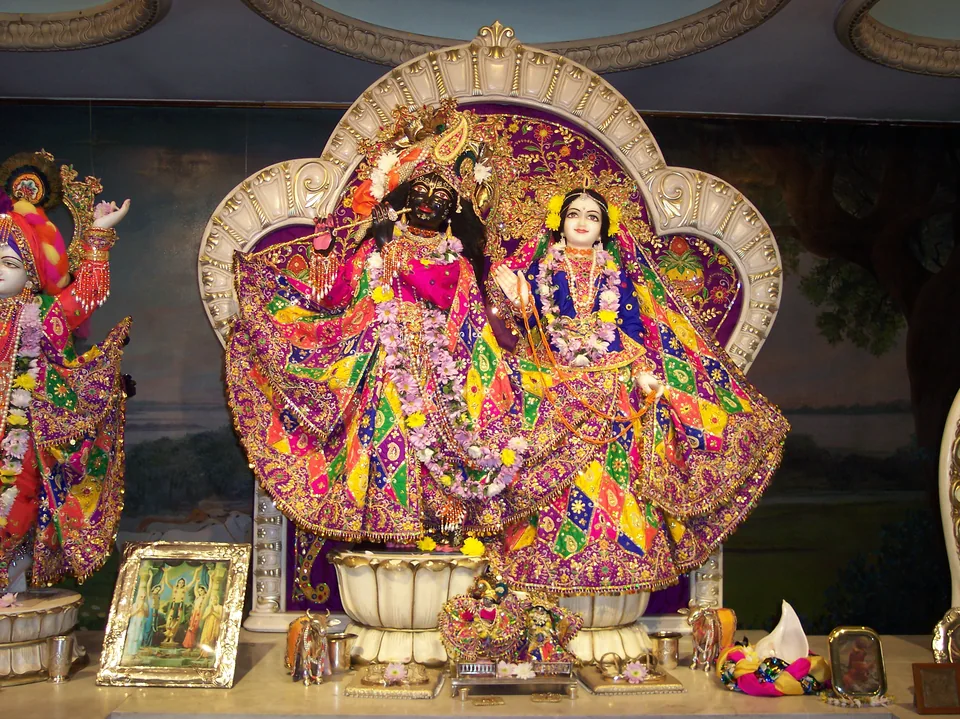
A backdrop creates a setting for the deity and the attire. Its size, colour and decorative detail are best considered in the context of the complete worship space.
Start with the space you will actually use.
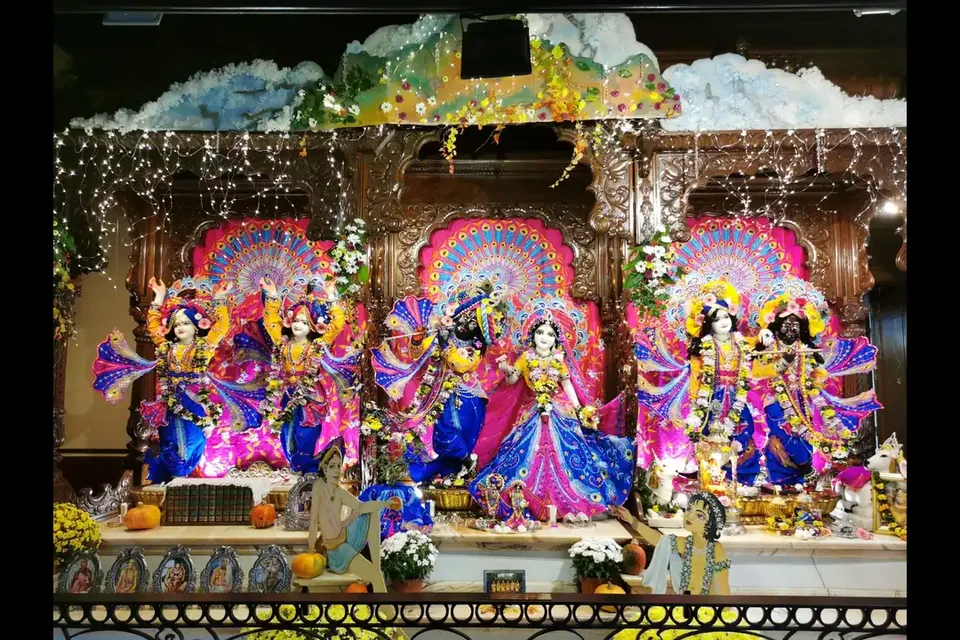
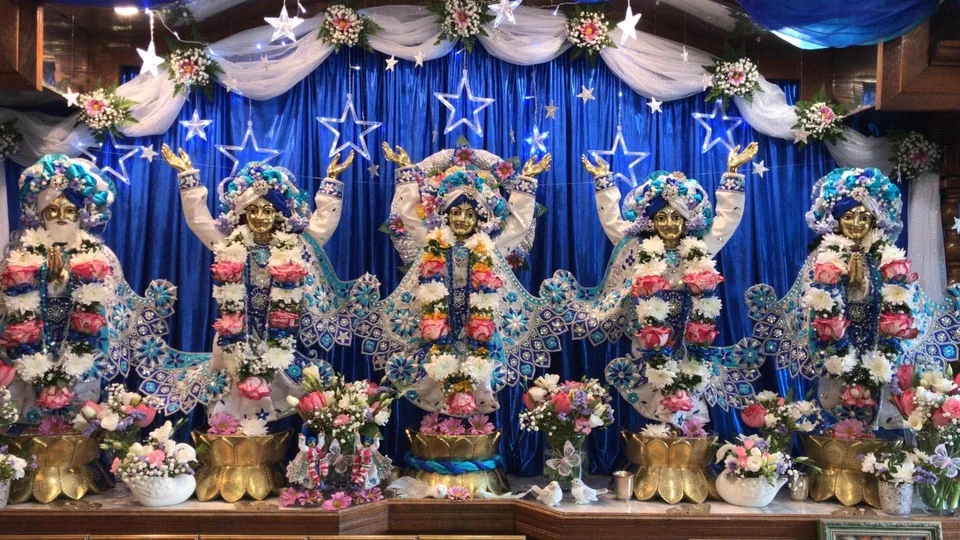
Send a clear front photograph of the worship space, with the deity and its existing setting visible. Then share the usable width and height for the new backdrop. Label the units and explain whether those dimensions refer to an existing frame, an opening or the complete area behind the deity.
Point out any features that shape the design, such as a central arch, side panels or an existing curtain arrangement. A simple labelled sketch can help communicate dimensions that are difficult to explain in a message. If several panels are needed, identify the measurements of each one separately.
Let the attire remain easy to see.
Think about the backdrop beside the colours of the dress, crowns, ornaments and floral decoration. Repeating an accent can create a connection; using a different background colour can help distinguish the attire from its setting. Share an overall photograph so the combination can be considered together.
You may want a backdrop for one festival outfit or a setting that works with several changing ensembles. Explain which is more important. A highly specific colour scheme can be appropriate for one celebration, while another palette may make coordination easier across different dresses.
The burgundy archive sample below concentrates flowers and peacock motifs around an arch, leaving a quieter centre with small scattered accents. In an enquiry, distinguish the outer decorated area from the area that will sit behind the deities. Share the usable space and say which part of this arrangement you want to adapt.
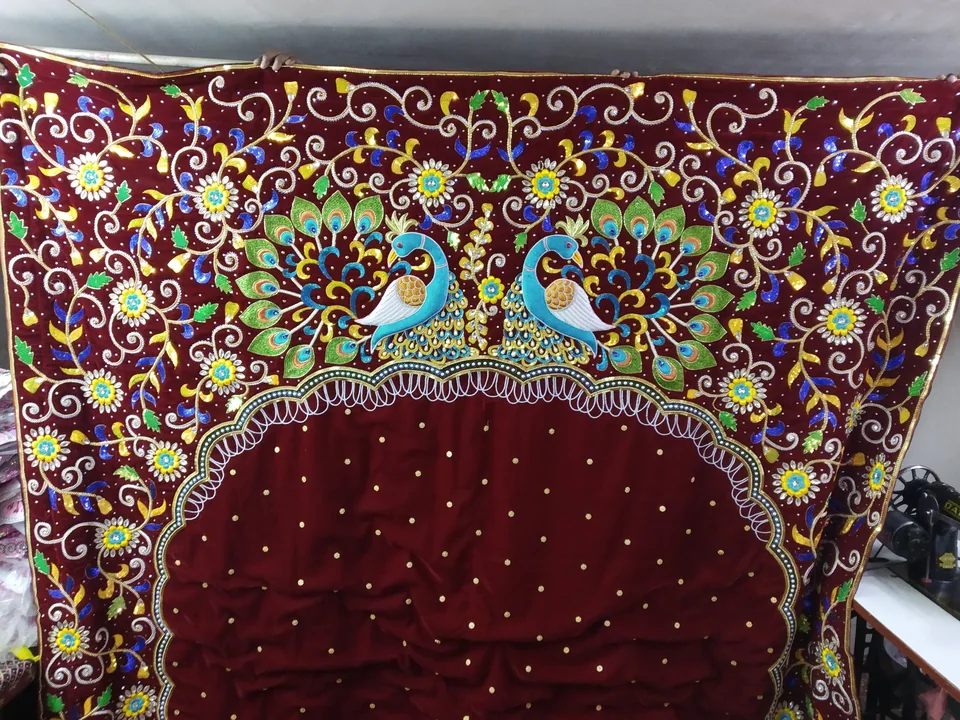
Consider fabric, motifs and scale.
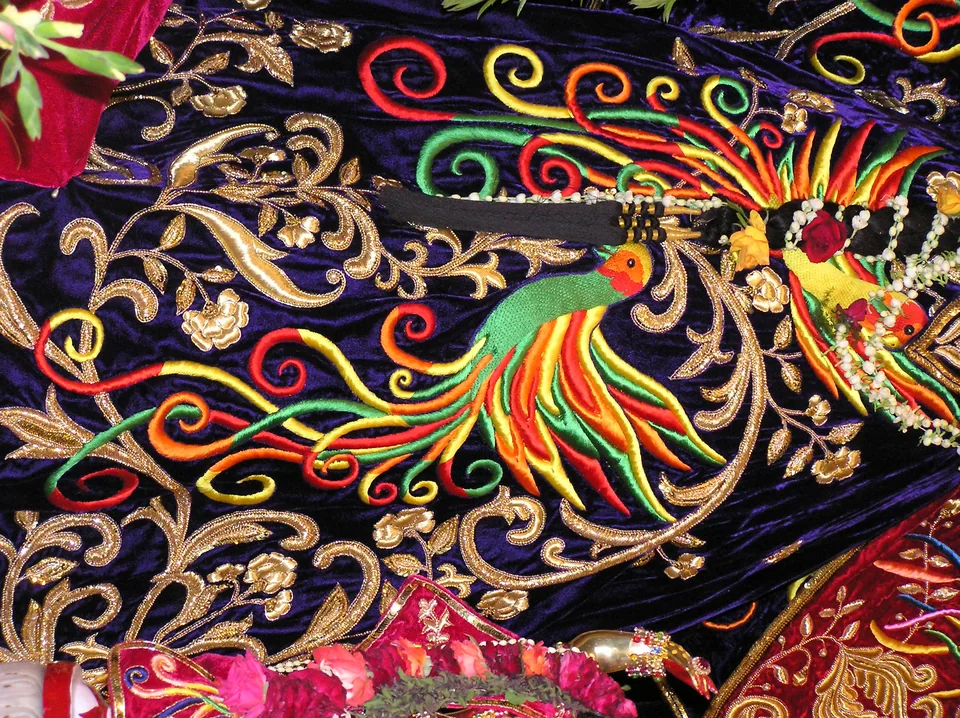
Our temple backdrop service includes discussion of fabric, colours, embroidery and decorative elements. Look at how much of a design will be visible around the deity and the ornaments. A motif may need to be placed differently if its centre would otherwise be covered by the ensemble.
Share the kind of detail you like: a decorative border, a floral arrangement, a richly worked surface or a simpler background. Discuss the actual fabric and finish being proposed rather than relying on a photograph to identify the material. The chosen construction should be considered alongside the size and intended arrangement.
The cream-and-blue close-up below is a different archive example. It shows repeated leaf shapes outlined in blue and pink, with floral details along the curve. Compare the repeated motif and the overall border arrangement separately; its appearance does not establish the decorative materials or the size needed for your space.
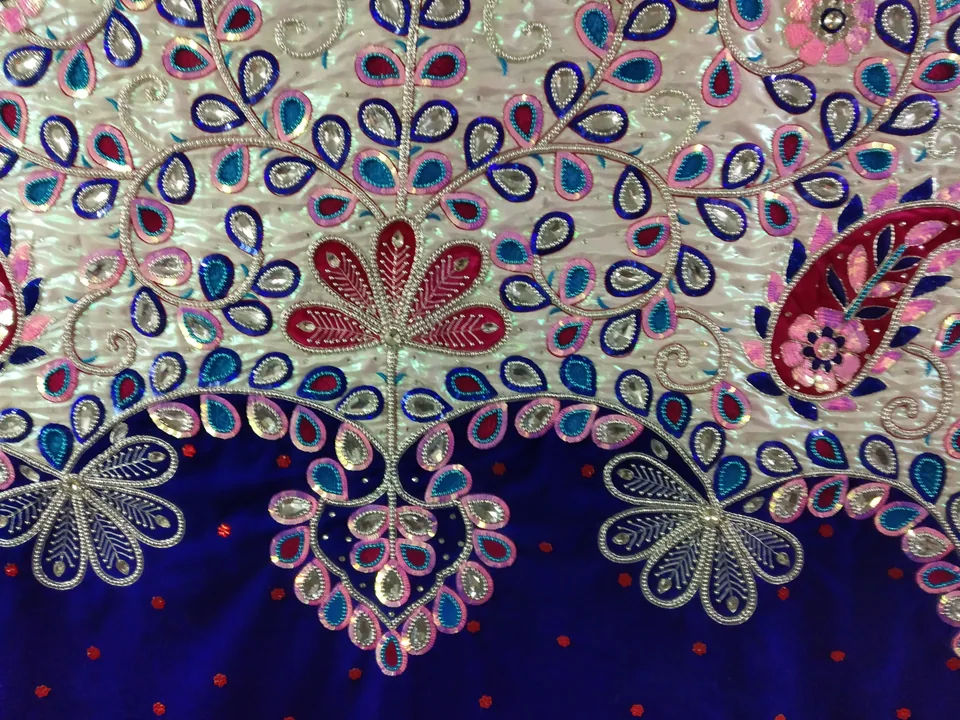
Explain the existing arrangement.
Tell us how your present backdrop is supported or fitted and whether the new design needs to work with that arrangement. Include photographs of relevant edges, fixing points or panel divisions if they help explain the space. Confirm which details the maker needs before finalising dimensions.
If you are also ordering a dress or accessories, keep those references in the same enquiry. Our festive attire guide explains how to bring a complete ensemble into one clear brief.
Bring the brief into one place.
- The deity or group of deities, photographed in the worship space.
- The usable width and height, with units and any panel divisions.
- Existing frame, curtain or fitting details to discuss.
- The attire and ornaments the backdrop should complement.
- Your colour references, decorative preferences and intended occasion.
- The date and arrangements you need to confirm with the maker.
You can begin through the temple backdrops service. If you are still considering the appearance, send the space photographs first and identify which decisions remain open.