CHOOSING YOUR DESIGN
From a poshak photograph to a clear colour and embroidery brief
Turn a poshak photograph into a useful reference by labelling the colour, border or motif you like, then stating what should change. Keep those design notes separate from the fit information and any accessories you already have.
Separate the dress from the whole display.
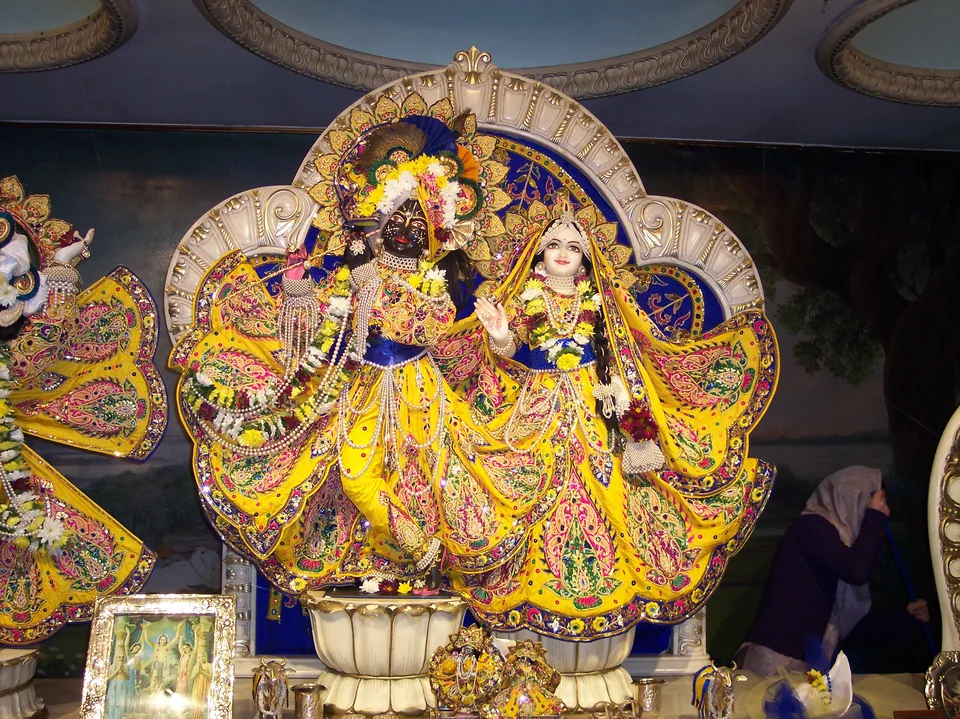
An ensemble photograph may include flowers, crowns, necklaces and a decorated backdrop as well as the garment. Identify whether you are referring to the dress fabric, its border or another part of the display. A colour seen beside the dress may belong to a garland or backdrop.
Start with one clear reference and add a short note: “I like the wide border, but I would like less decoration in the centre.” That gives a useful direction without asking the maker to guess which of the photograph’s many details prompted your enquiry.
Give each colour a role.
List a main fabric colour, a supporting colour if wanted, and the appearance you prefer for the embroidery. Explain where you imagine each one: the garment body, a border, a scarf or a repeated motif. If an existing mukut or mala sets the palette, send its photograph too.
Keep a colour preference separate from a material choice. A gold-coloured decorative detail does not establish the thread or trim composition. Ask about the actual proposed fabric and decoration, and confirm the colour using the references or samples the maker can provide.
Describe the pattern and the amount of work.
Point out a floral motif, an outline or a repeated border rather than relying on “heavy” or “simple” alone. Explain whether you want decoration concentrated around an edge, repeated across the garment or placed in a few areas. Mention spaces you would prefer to leave undecorated.
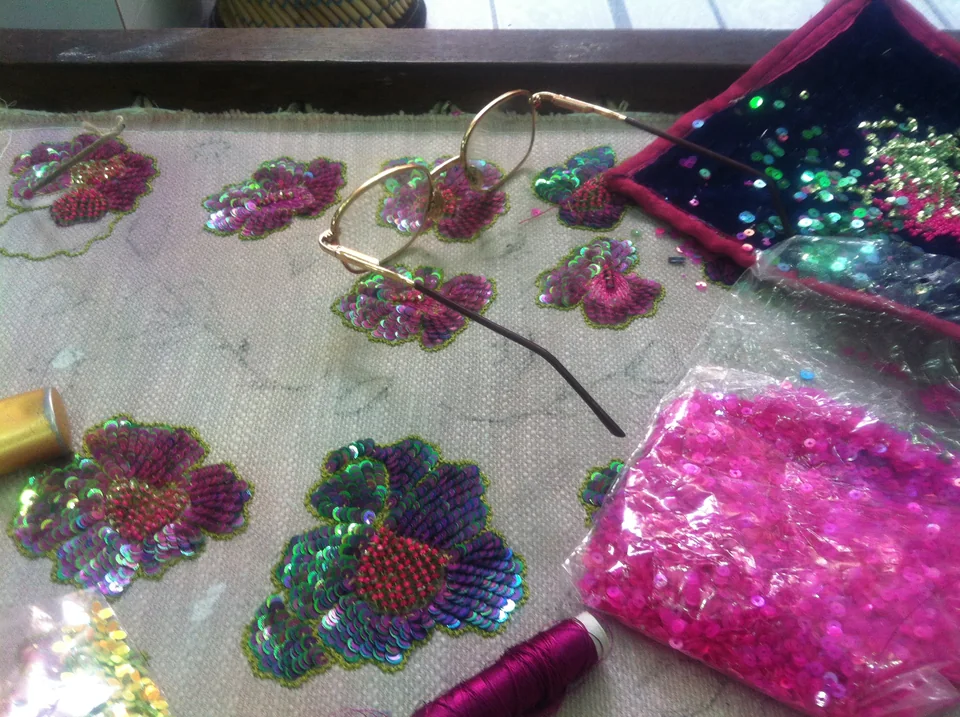
Ask how the detail will be arranged at your deity’s garment size. A motif in a close photograph does not show its scale within the complete outfit. Our hand embroidery guide explains the different visual contributions of zari, sequins and beads.
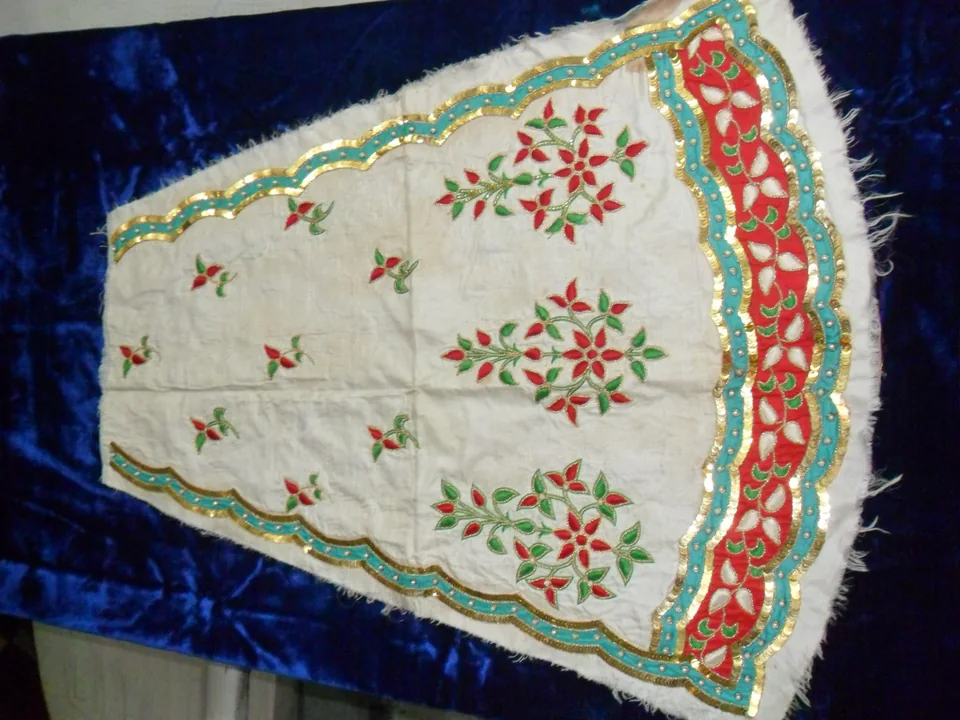
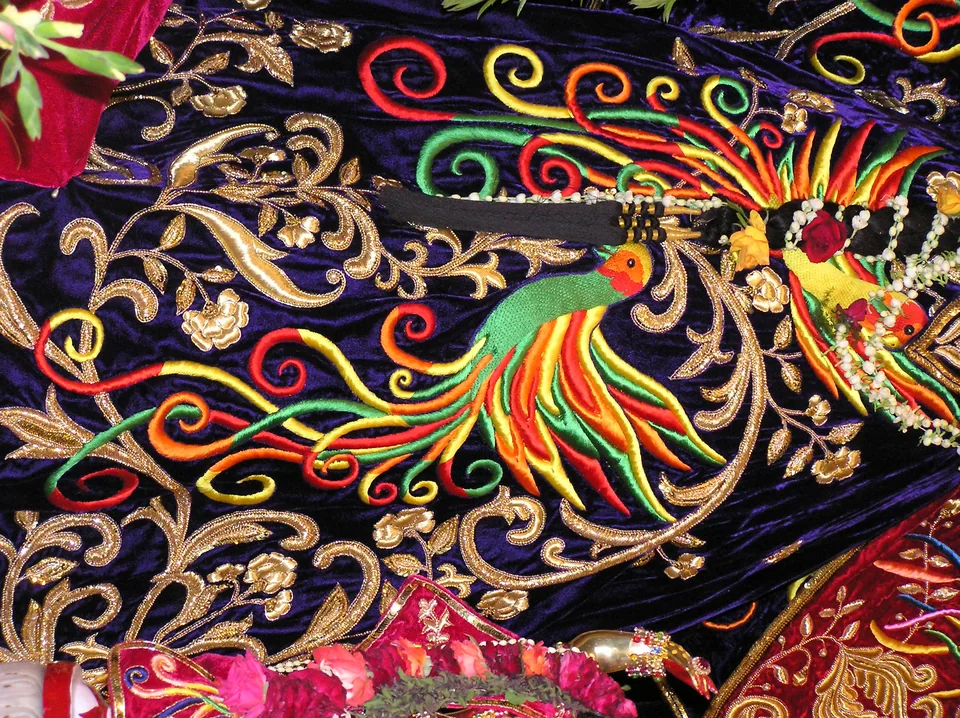
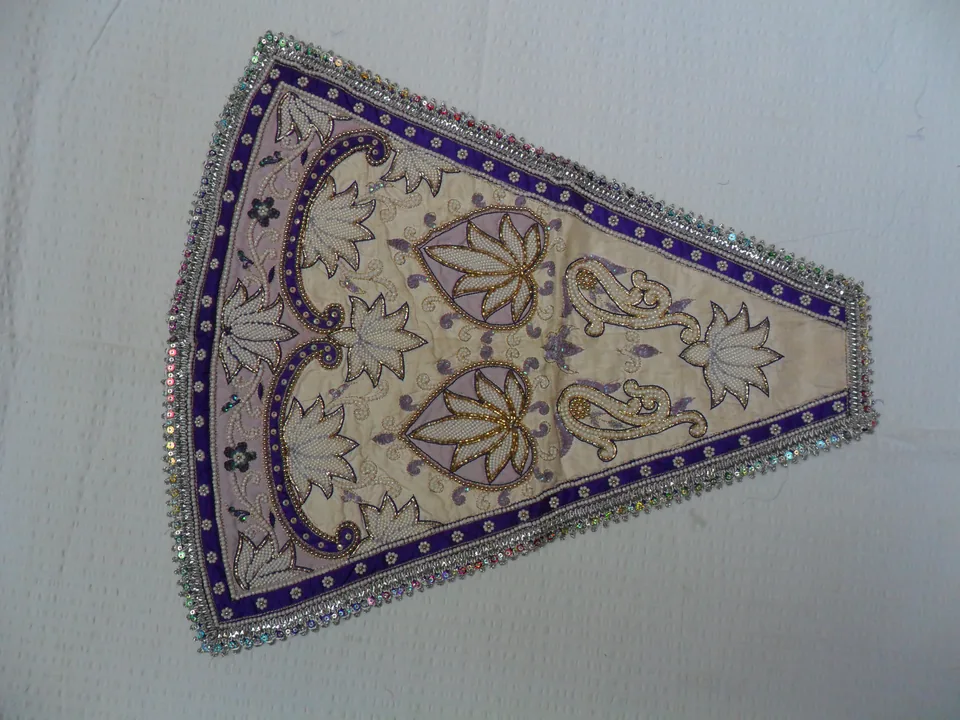
The cover photograph combines three distinct choices: a deep blue-purple background, bright bird motifs and gold-coloured leafy scrolls. You can request one of those without requesting all three. Compare it with the cream-coloured panel below, where purple outlines leave much more of the background visible. This is a useful way to describe decorative coverage, rather than a fixed rule about the “best” design.
If you use several references, label their purpose.
Two photographs can explain a combination: colour from the first and border arrangement from the second. Label them that way. Also identify any element you do not want, such as an additional scarf or a densely decorated panel. A list of unrelated photographs leaves those decisions unresolved.
Use references to communicate preferences and discuss an original combination with the maker. Do not assume that a photographed garment’s exact fabric, dimensions or construction will be available. Record the agreed interpretation in words so both sides can return to the same brief.
Finish with a short design note.
A useful note could read: “The dress is for daily worship. I like the colour in photograph A and the border in photograph B. Please discuss a quieter centre and a scarf that works with my existing mukut.” Add the deity, garment list and measurements separately.
- Name the main colour and where any accent should appear.
- Label the border, motif or finish you are referencing.
- State what should change and which accessories will be kept.
- Ask which fabric and decorative materials are proposed.
Explore the real collection on our custom poshak page, then attach your selected photographs after opening the WhatsApp conversation.