CHOOSING THE MATERIALS
Cotton, silk or satin for a custom poshak: compare the actual fabric
To choose between cotton, silk and satin for a custom poshak, compare the actual proposed fabric with your garment shape, embroidery and dressing routine. Confirm its composition and care instructions rather than choosing from a fabric name alone.
Describe the dressing routine and the desired shape.
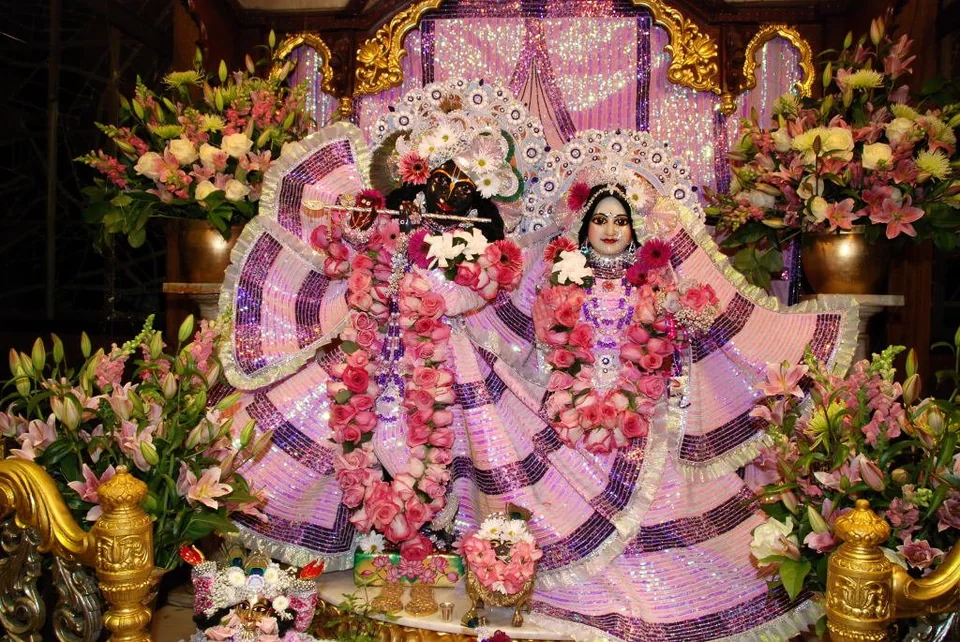
Tell the maker whether the poshak is for regular worship, a particular festival or a coordinated pair. Explain how the garments are put on, which pieces are changed together and the shape you prefer. A neat defined border and a broadly spreading skirt are different design requests.
Ask how the proposed fabric works within that garment. If you have a current outfit whose shape you like, share a complete photograph and explain what you want to retain. The discussion should connect the fabric to the actual dress rather than select a material name in isolation.
Cotton and silk name fibres; satin names a weave.
Cotton and silk describe fibres. Satin describes a weave that gives fabric a smooth, lustrous surface, so satin is not another name for silk. It can be woven from silk or from other fibres, including blends. This distinction is illustrated by the Museum at FIT’s fibre-focused exhibition and an Art Institute collection record of silk and polyester in satin weave.
When someone offers a satin option, ask for its fibre composition as well as the appearance you want. A photograph of shiny cloth cannot settle that question. Then discuss the actual sample with your garment shape and embroidery.
Ask what the offered sample actually is.
Our custom poshak service includes choices described as cotton, silk and satin. Ask about the composition, finish and any lining proposed for the particular option under discussion. If you are seeking a specific material composition, state that clearly and confirm it directly.
A finished photograph can help you describe colour and appearance, but it cannot verify the material on its own. Ask what references or samples are available for the current proposal. Keep the fabric description with the design notes so it is clear which option the quote refers to.
Review the fabric and embroidery as one choice.
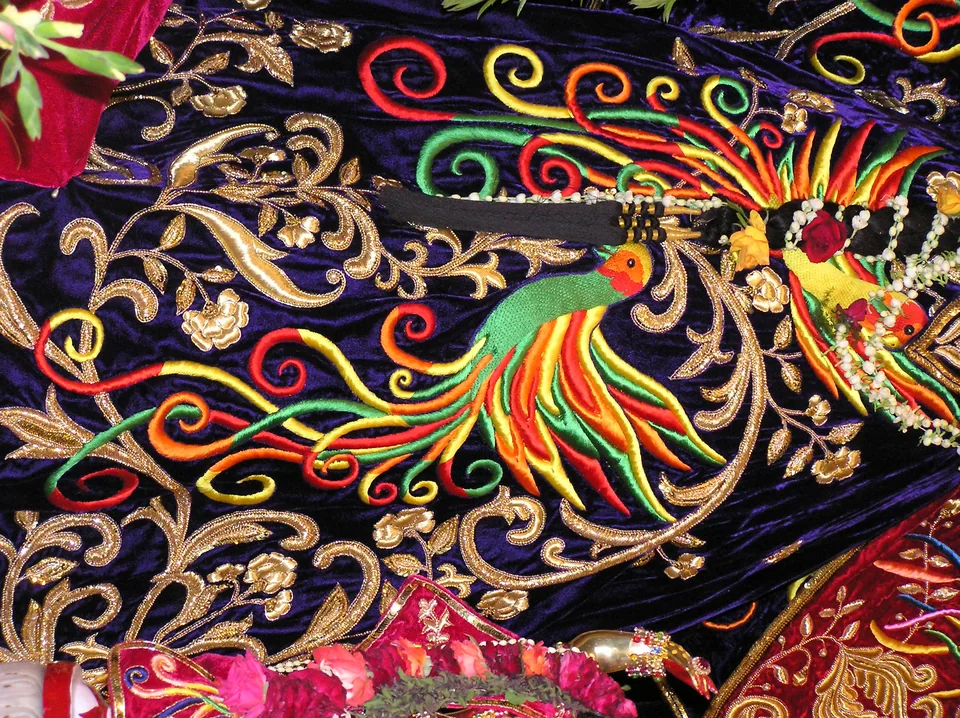
Explain where you want the embroidery and how much of the garment it should cover. A narrow border, repeated floral motifs and extensive decoration create different briefs. Ask how the proposed fabric, embroidery and garment construction will be brought together for your deity’s measurements.
If a sample outfit attracts you, identify whether the fabric appearance or the decorative work is the feature you like. Our zari, sequins and beads guide helps separate those details. Neither the photographed sheen nor a metallic colour establishes the composition of the materials.
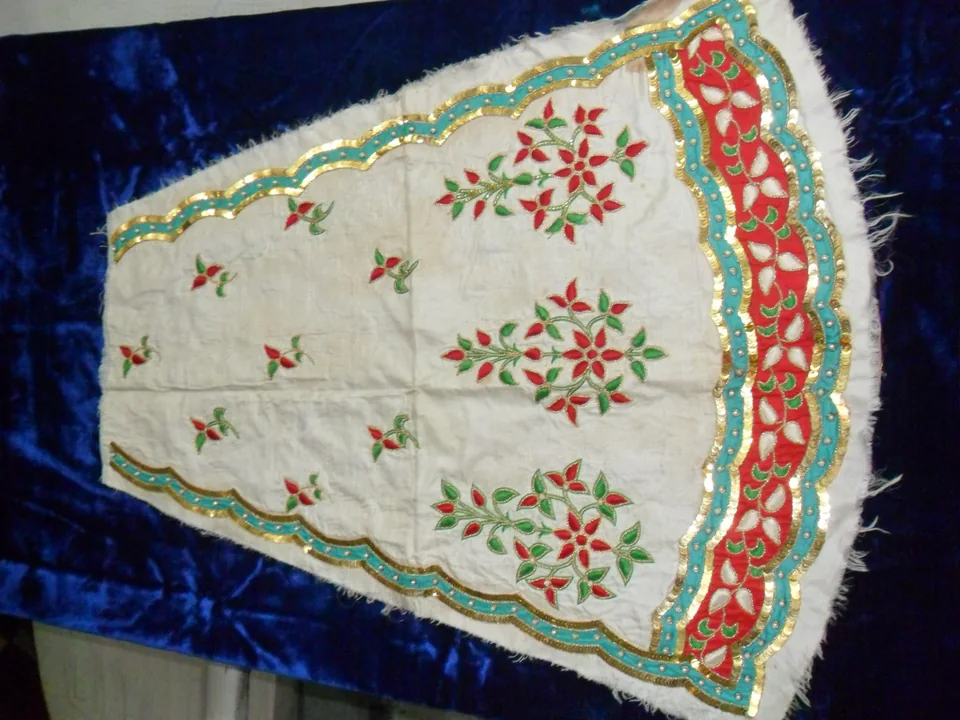
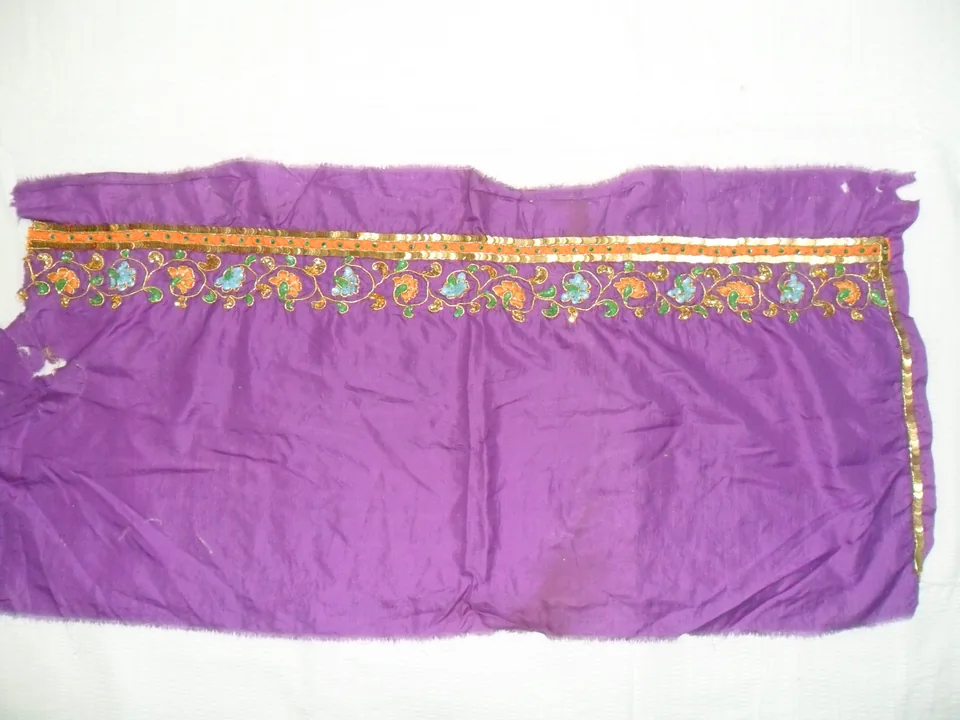
The cream-coloured cover sample has small floral motifs across the centre and a more prominent red-and-green border. The purple example below leaves most of the surface undecorated and places detail near one edge. These photographs help compare the arrangement of embroidery. They cannot tell you whether the cloth contains cotton, silk or other fibres.
Compare options using the same garment brief.
Keep the pieces, dimensions and decorative coverage consistent when asking about alternative fabrics. Then record the differences being proposed. If one option also changes the border or garment shape, identify that change rather than treating the proposals as a fabric-only comparison.
- What is the proposed fabric and composition?
- What finish, lining or supporting construction is included?
- How will the colour and embroidered areas be confirmed?
- Does choosing this option change any garment details?
This gives you a clearer basis for discussing preference and the corresponding quote.
Ask about care for the complete finished dress.
Care questions belong to the complete garment, including its embroidery, trim, lining and fastenings. Ask the maker for handling, cleaning and storage instructions for the actual materials chosen. Avoid applying a general rule for cotton, silk or satin to a decorated outfit without confirmation.
Bring the selected fabric description, garment list, embroidery brief and any care questions into the same message before you confirm. Our daily worship guide considers the routine around the dress, while the quote guide helps check what the proposal includes.