COORDINATING YOUR POSHAK
Planning Radha Krishna poshak: one coordinated design, two clear briefs
For coordinated Radha Krishna poshak, agree the shared colour or embroidery and prepare a separate garment brief for each deity. The pair can have a clear visual connection while each outfit keeps its own fit and requirements.
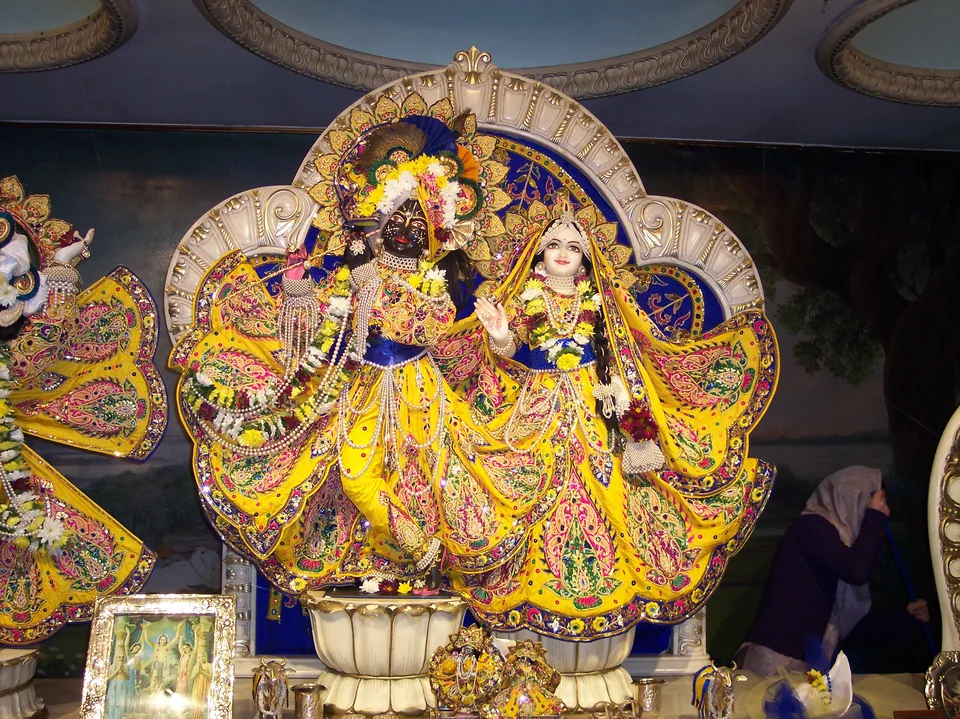
Decide what will connect the two outfits.
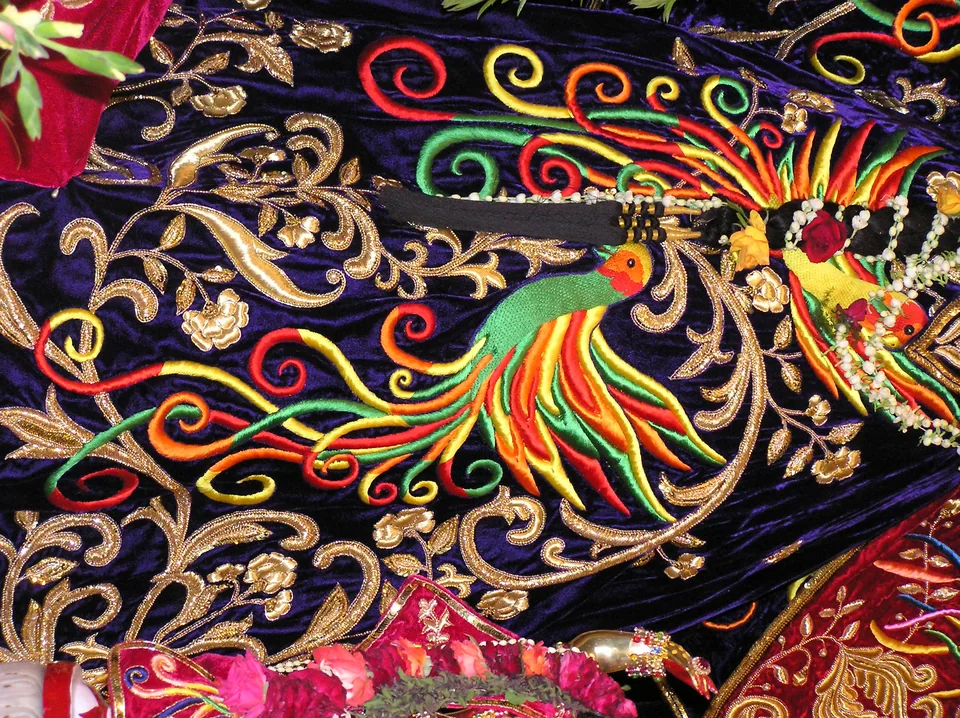
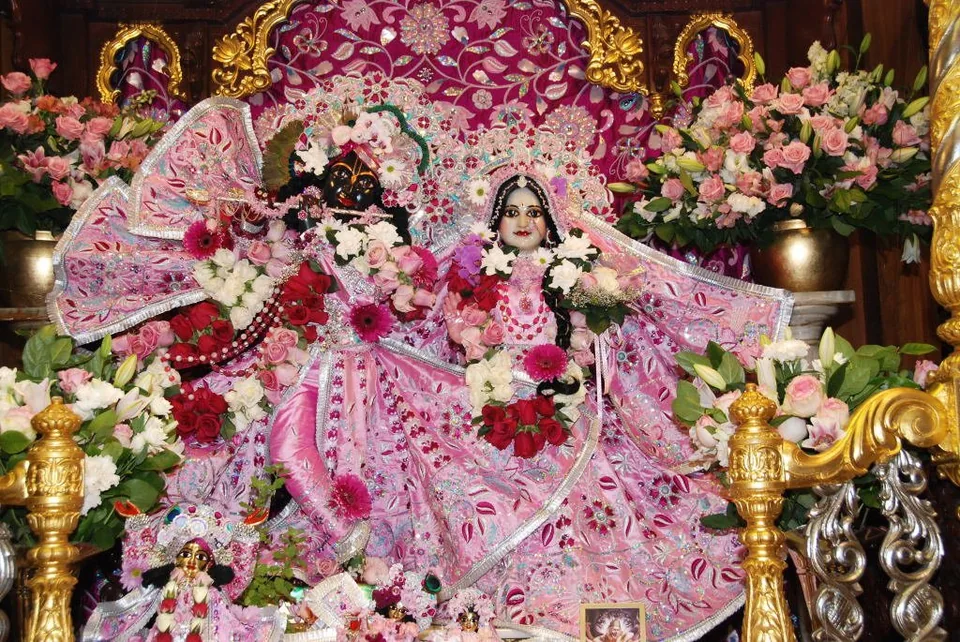
“Matching” can describe the same main colour, a repeated embroidered border or two related colours with a shared decorative finish. Tell the maker which meaning you have in mind. If a favourite outfit already establishes the colour scheme, identify the part you want to carry into the new pair.
You might prefer one colour for both garments, or a main colour on one outfit echoed in the border of the other. These are design directions to discuss, rather than rules. Write down the shared elements before choosing individual motifs so the connection remains clear.
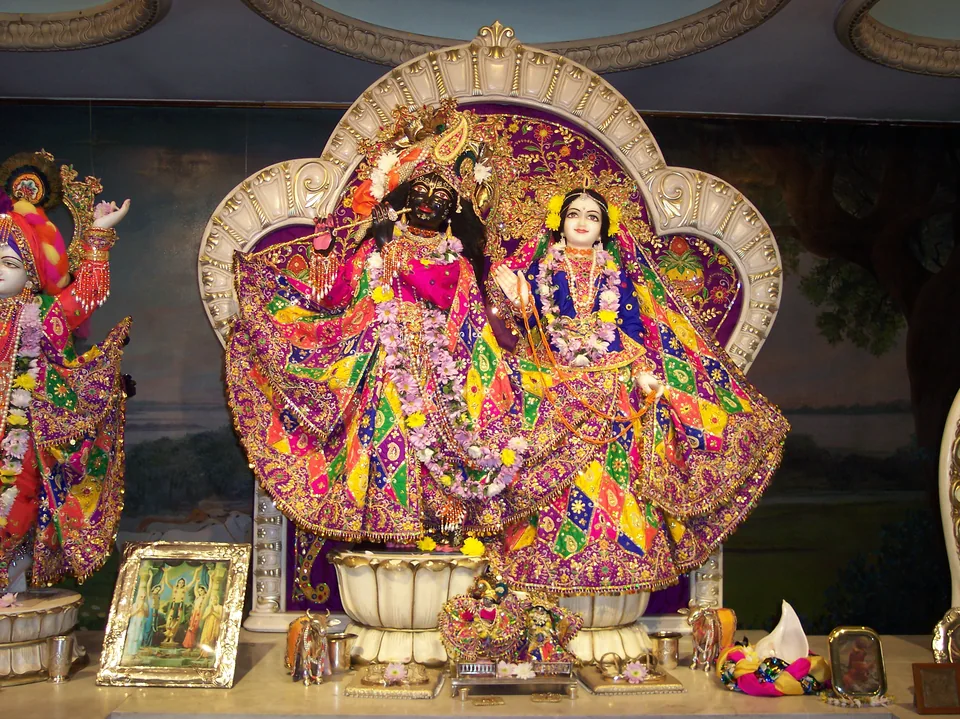
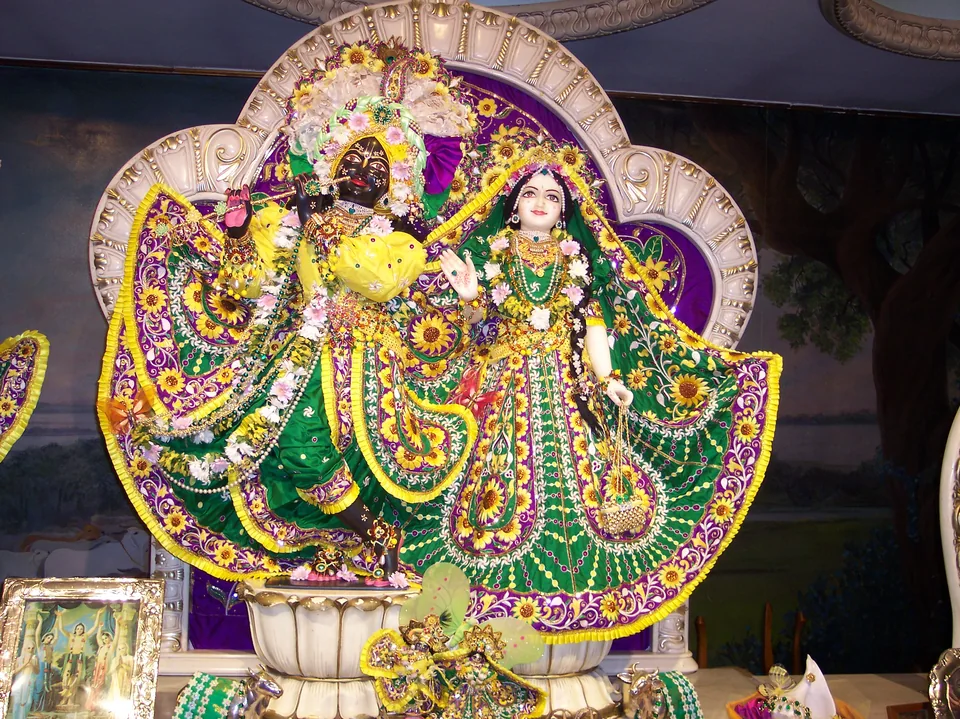
In the yellow archive example above, blue accents and repeated multicoloured motifs connect garments with different shapes. The green example later in this guide uses purple edging to create another shared thread. When choosing a reference, name the connection you want to repeat: “yellow with blue accents” is clearer than “exactly matching.”
Make a garment list for each deity.
Use two labelled lists: one for Shri Krishna and one for Radha Rani. Identify each garment you need, including any dhoti, skirt, blouse, sleeves, dupatta or turban cloth that belongs to your dressing practice. Mark an item as “existing” if it will be kept.
This is particularly useful when replacing only part of a set. Explain whether the new piece must complement an existing garment or whether both outfits are being planned afresh. A photograph of a complete ensemble does not establish which pieces are included in your commission.
Keep the measurements individual.
Label every photograph and measurement with the deity it belongs to. Use units beside the numbers and explain the beginning and end of each dimension. Keep the measurements of a well-fitting current outfit separate from measurements taken from the deity, so the maker knows what each number describes.
A similar overall height does not settle the garment proportions for a pair. Discuss the shape, lengths and dressing method for each outfit. Our measurement guide covers the information to prepare without turning it into a universal size chart.
Include the complete view as well as close details.
Send a photograph of the pair together in the worship space. Then add clear individual photographs and close views of the borders or ornaments that matter to the new design. The complete view helps explain the relationship between the outfits; close photographs explain the detail you like.
Identify any mukuts, malas and backdrop that will remain in use. Ask how a repeated motif or border can be adapted to the different garment shapes. The aim is to agree the relationship between the pieces, rather than assume one detail will appear at the same size everywhere.
Review one combined brief before confirming.
- Two garment lists and two labelled sets of measurements.
- The shared colour, border or embroidery detail.
- Individual differences you want to retain.
- Existing accessories and any new pieces to be included.
- The occasion and requested date, with the quote and schedule to be confirmed.
Use our custom poshak page to start the discussion. After opening WhatsApp, attach your labelled photographs. Keeping both briefs together makes it easier to explain what should coordinate and what should remain individual.