STORIES FROM THE WORKSHOP
Inside Ashok School of Hand Embroidery
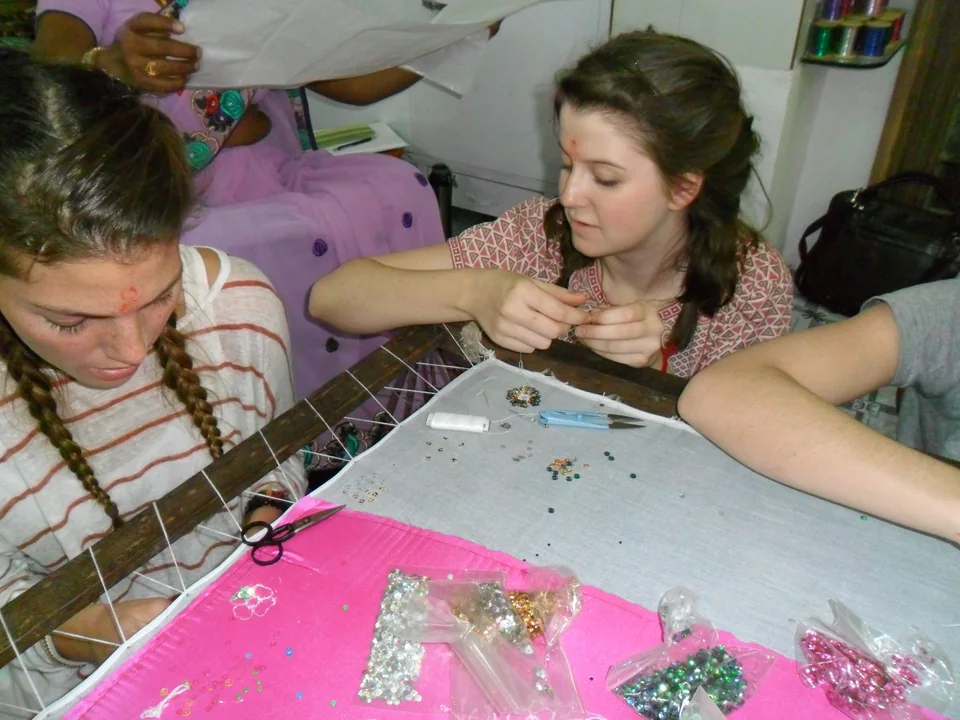
The school archive brings the craft into close view: fabric stretched in frames, materials on the table and participants gathered around work in progress.
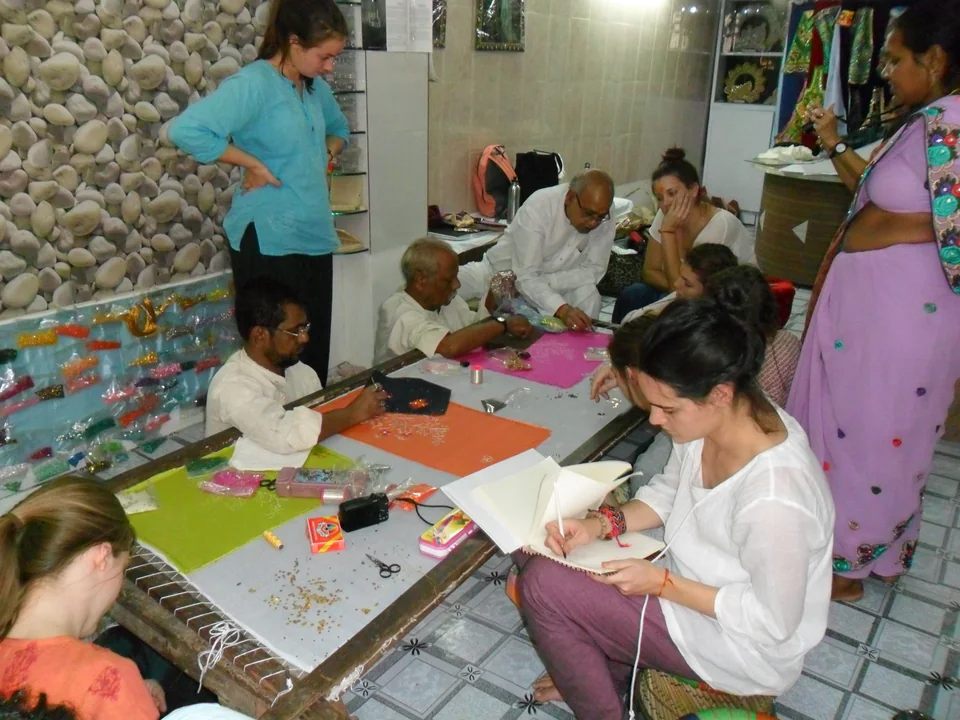
A view from the embroidery table.
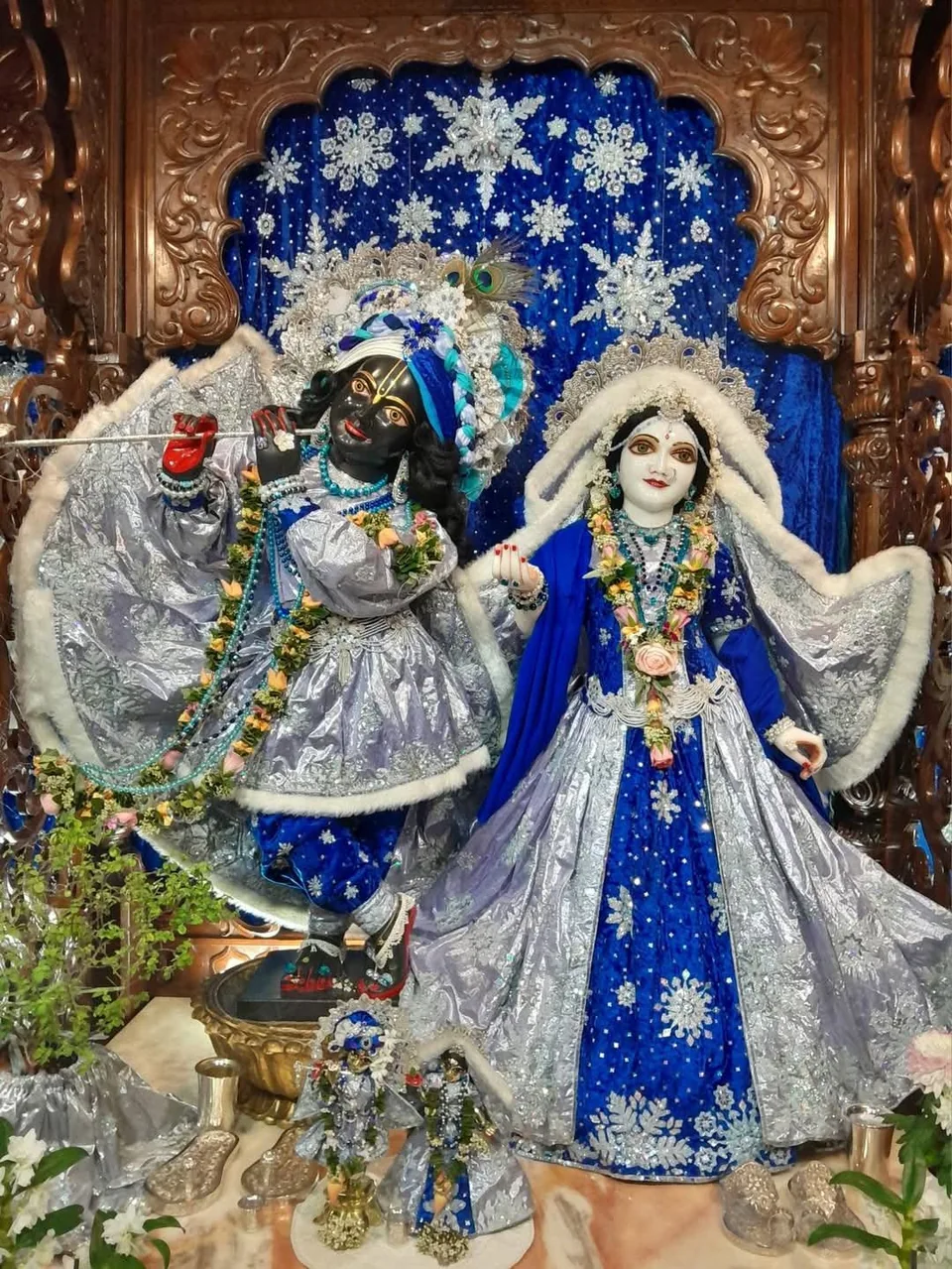
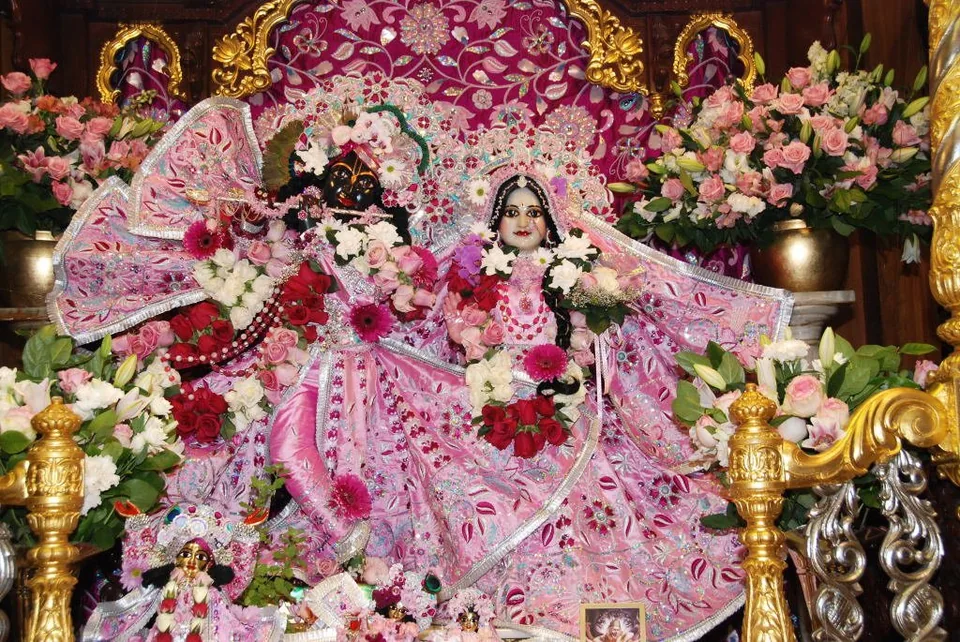
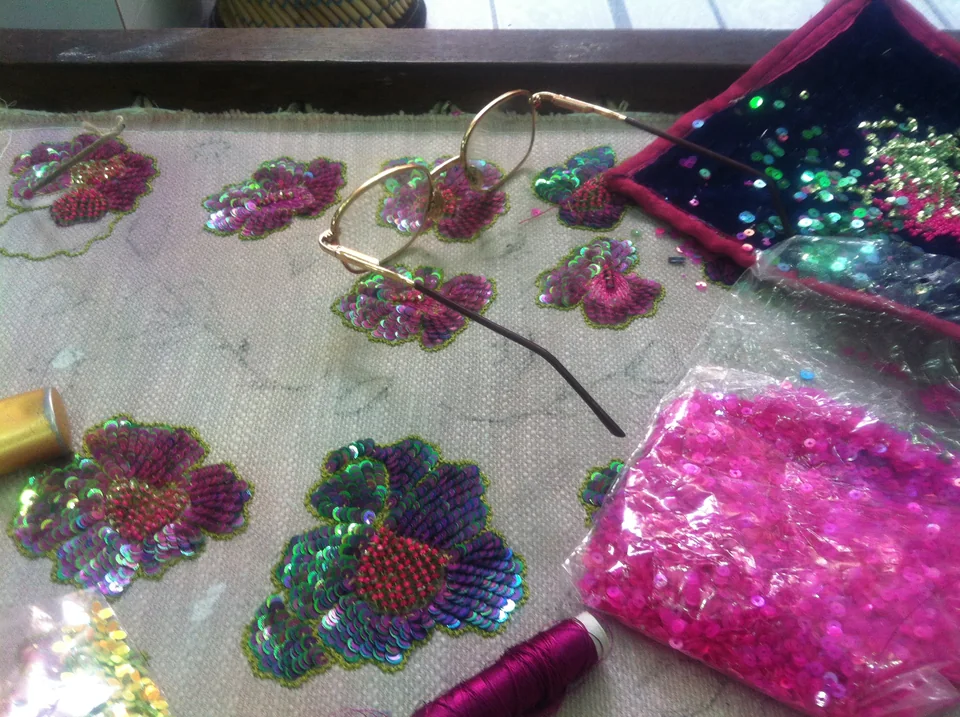
Finished deity attire is usually photographed as a complete ensemble. The Ashok School of Hand Embroidery photographs show another part of the story. Here, the focus is on the table: the fabric being worked, the outline of a motif and the small materials that will become part of the design.
In these archive photographs, participants work around embroidery frames and look closely at samples. Some images show a group discussing work together; others move nearer to the hands and the fabric. They give the craft a different scale from a photograph of a finished dress in a temple setting.
These are photographs from the school’s archive, presented as a record of past sessions. They do not describe a current course timetable or enrolment programme.
Learning starts with looking closely.
A sample can make a decorative decision easier to understand. You can see where a stitched outline begins, how colours meet within a motif and how reflective details change the appearance of a surface. Looking at a small section of work makes those relationships easier to discuss.
The archive includes floral motifs, decorative elements and embroidery held in frames. It also shows materials arranged close to the work. Those photographs are useful when you want to understand what goes into the small details that are less obvious in a complete outfit.
Connect the sample to the finished design.
When looking through workshop photographs, compare a small motif with the larger purpose of the design. A border, a floral detail and a decorative panel each occupy a different place in an ensemble. Their scale, colour and spacing need to make sense in that setting.
Our note on hand embroidery, zari, sequins and beads explores those choices from the perspective of deity attire. It is a useful companion to the archive if you are interested in the relationship between a material sample and the appearance of a complete dress.
Bring a clear question to the conversation.
If the archive has sparked an interest in hand embroidery, think about what you would like to understand or practise. You might be interested in how a motif is planned, how decorative materials are arranged or how the work is considered for a garment. Explain whether you are starting from the beginning or have previous experience.
For enquiries about the school, contact us to ask about current availability and arrangements. Confirm the format, the intended learning focus, the materials involved and any dates directly. The photographs provide a view of past sessions; current details should come from a fresh conversation.
A closer connection to the craft.
Our workshop archive sits alongside the collection of deity dresses, mukuts and backdrops created in Vrindavan. Together, these photographs show both the finished adornment and the smaller work that makes up its detail.
Explore the deity attire and design services if you are planning an ensemble, or visit our story to learn about Ashok Mukut Wala. You can also find the school’s public page through the link below and contact us with a specific question about hand embroidery.