GIVING A DRESS A NEW BRIEF
Restoring or redesigning an existing poshak: what to show and what to keep
An existing poshak can be considered for restitching and embroidery changes, with the proposed work assessed for that garment. Show its condition, identify the features you want to keep and describe the change you have in mind.
Explain why you want work on the current dress.
Is a seam coming apart, does the fit need attention, or would you like a different embroidered detail? Separate a repair request from a design change. If both matter, identify the immediate concern first and then describe the appearance you would like.
Ashok Mukut Wala’s restoration and redesign service includes restitching and embroidery enhancements. The proposed work still needs to be discussed for the actual garment. Avoid deciding that every change is possible from the appearance of the dress alone.
Show the complete garment and the affected areas.
Send a complete front view and a view of the reverse where relevant. Add clear close photographs of the area you want assessed: a seam, edge, fastening, embroidery or lining. Identify where each close-up sits within the garment, so the maker is not looking at an isolated detail without context.
Describe what you have noticed in plain words, such as “the border is loose here” or “this fastening no longer holds as it did.” Mention previous alterations if known. Photographs help begin the discussion; ask whether the garment needs to be examined directly before the work can be agreed.
Make two lists: retain and change.
The retain list might include the main colour, a favourite motif, the current garment shape or a particular border. The change list could describe restitching, a fit adjustment or additional embroidery to discuss. State which features matter most if the proposals affect one another.
If the dress has sentimental significance, explain which parts you want preserved. Ask whether proposed work would replace, remove or cover an existing detail. Treat these as decisions to confirm with the maker, rather than assume a refresh will leave every original feature untouched.
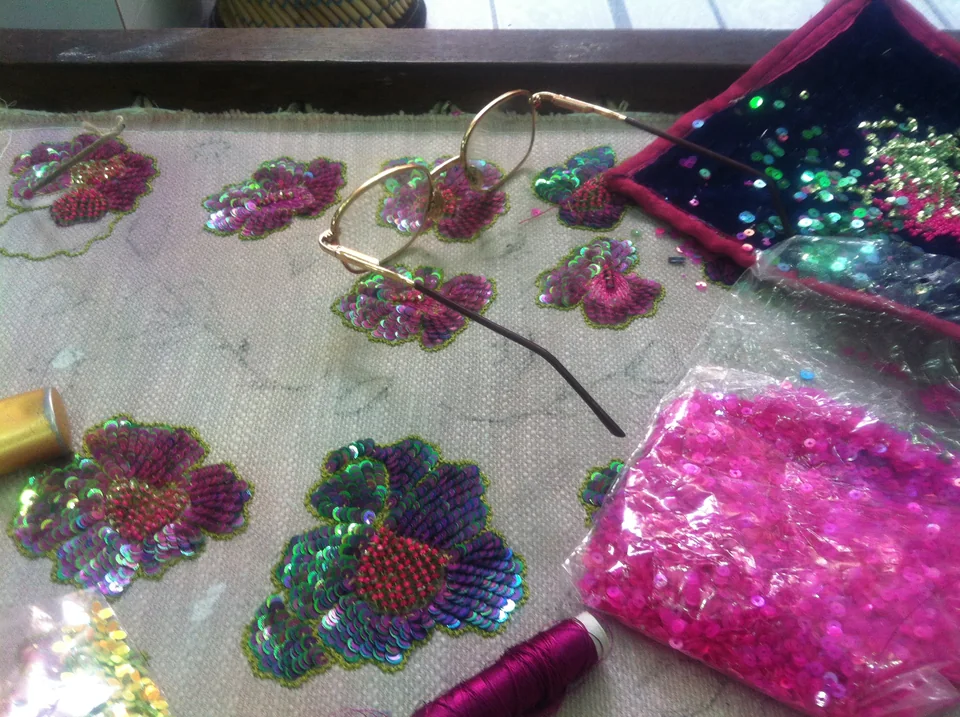
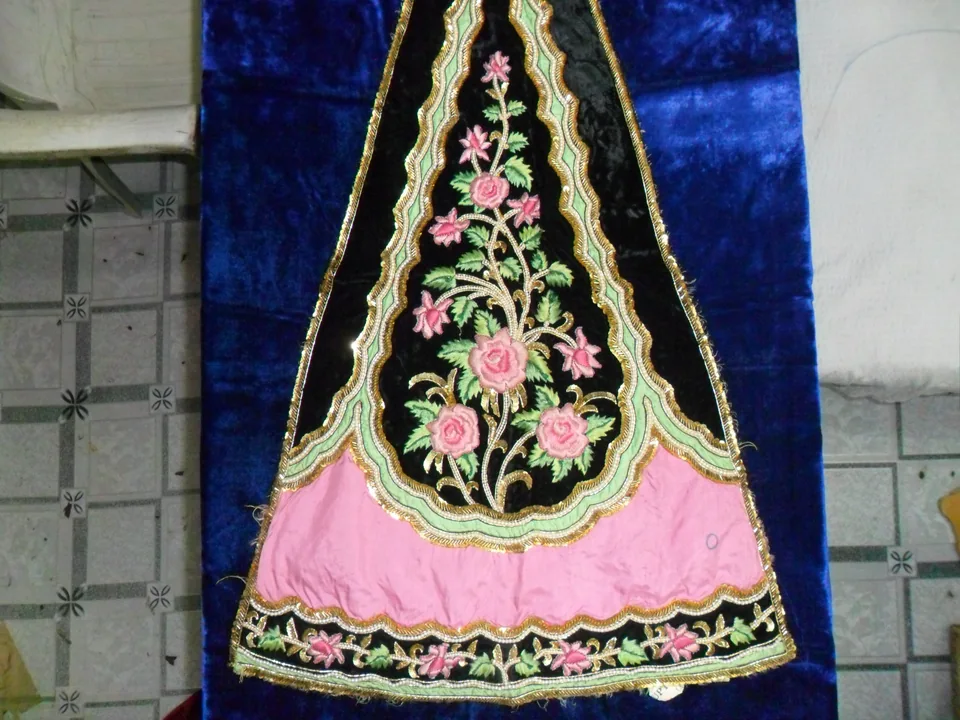
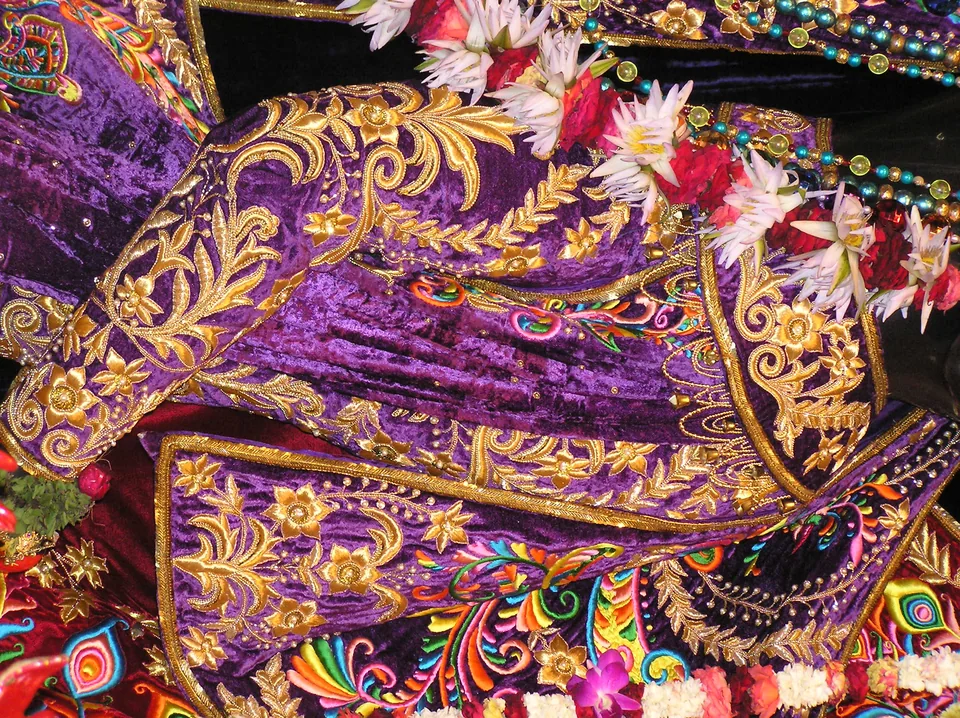
The black-and-pink archive sample above has several separately identifiable features: a central floral trail, a scalloped outline, a pink lower area and a floral hem border. A retain/change note can name each one independently. The purple close-up below offers another example of a detail someone might wish to preserve; neither photograph documents repair work or a restoration result.
Explain the fit and the pieces it must work with.
If fit is part of the problem, describe where the garment currently sits and where you would prefer it to end. Label known measurements with units and distinguish the garment’s dimensions from those of the deity. Our measurement guide can help organise the information.
Include a photograph of the dress with any companion outfit, mukut or mala that will remain in use. A redesigned piece may need to continue a colour or border within an existing ensemble. Explain whether a matching new piece is also being considered, so the full scope can be discussed.
Confirm the proposed work before proceeding.
- Which areas will be repaired or restitched?
- Which original details will be retained, replaced or covered?
- What embroidery or fit changes are proposed?
- Does the maker need to inspect the garment before confirming?
- What quote, timing and receiving arrangements have been agreed?
Prepare a restoration enquiry and attach the photographs after opening WhatsApp. If you are deciding between redesigning this dress and commissioning another, our custom poshak page explains the information useful for a new design.