THE FINISHING DETAILS
Choosing a mukut, mala and deity accessories
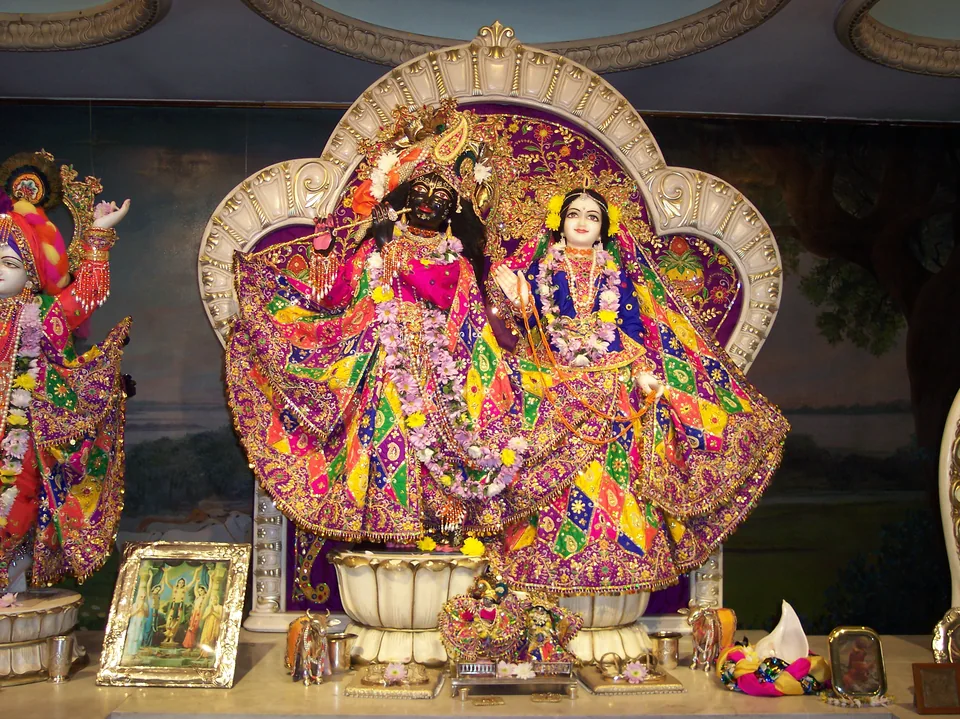
A crown, a mala or a small decorative detail can change the appearance of an entire outfit. Start with the deity and the dress, then choose the accessories that belong with them.
Begin with what you already have.
You may be choosing a new mukut for a dress you already use, or planning a complete outfit with new accessories. Explain which situation applies. A photograph of the deity in the existing ensemble helps show the proportions and the pieces you would like to keep.
If there is a favourite crown, necklace or mala that must work with the new dress, include it in the reference photographs. Show it on the deity when possible, as well as in a close-up. This makes the discussion more useful than choosing an accessory from a separate product photograph alone.
Bring colour and proportion together.
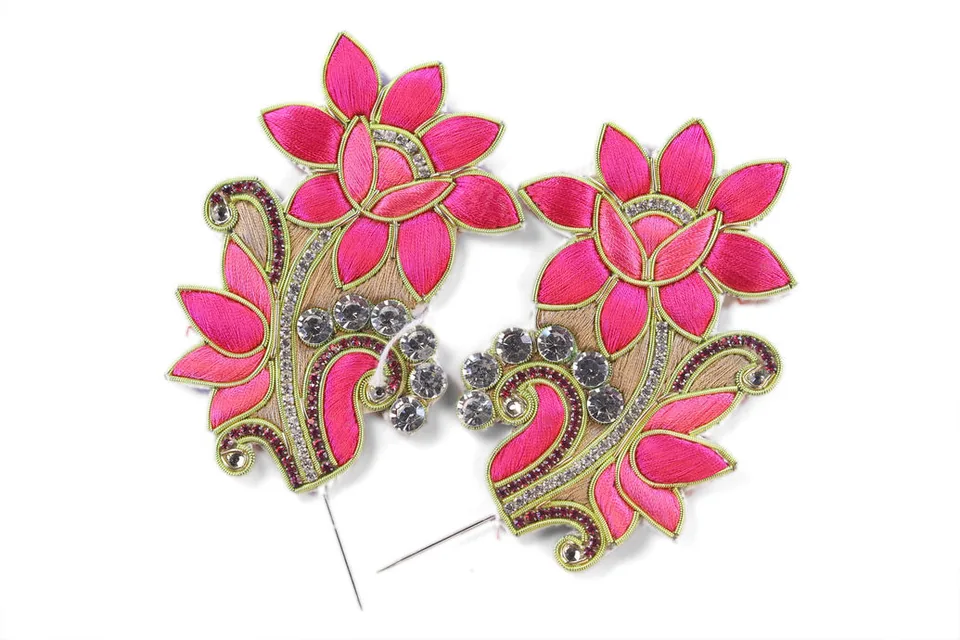
Accessories can echo a border, repeat an accent colour or introduce a decorative finish. You do not need every element to match exactly. A coordinated ensemble can share one colour or a repeated detail while allowing the dress and crown to retain their own character.
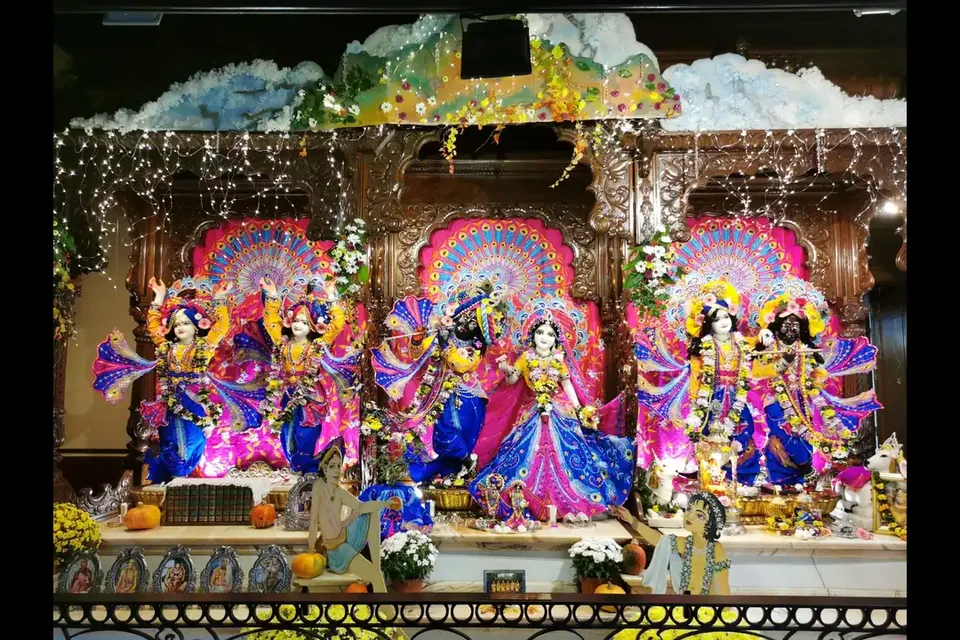
Consider the complete view. The size of a crown and the length of a mala should be discussed in relation to the deity and the garment. A large detail in a close-up photograph may have a different effect when seen beside a full outfit. Share both close photographs and an overall view of the worship space.
Discuss the way the accessory will fit.
Appearance is only one part of selecting a mukut. Ask which measurements and reference photographs are needed for the fit, and describe how your existing crown or accessory is supported or fastened. A garment size does not provide all the information needed for a crown.
Discuss the actual materials, construction and fastening of the proposed piece. Decorative elements can look similar in photographs while differing in composition or finish. Confirm those details with the maker, especially when you are choosing a specific type of bead, ornament or metallic appearance.
Choose around the occasion.
For daily worship attire, you may want accessories that sit easily within the dressing routine and work with more than one outfit. For a festival ensemble, you may prefer a more distinctive combination planned around a particular colour or embroidered motif.
These are preferences to discuss, rather than fixed rules. Tell us how the accessories will be used, which pieces will be changed regularly and whether several deities need a coordinated set. That context helps define the scope of the enquiry.